


2026 Mitsubishi Eclipse Cross vs. 2026 Honda HR-V
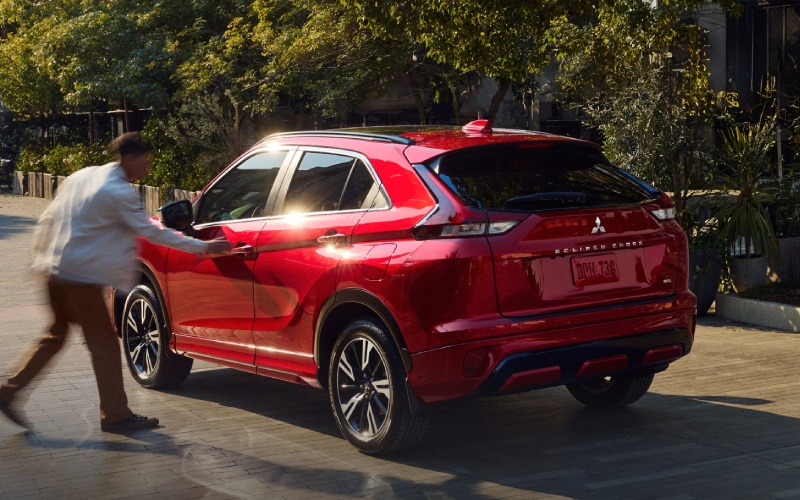
White Bear Mitsubishi – Which small SUV gives you more winter-ready traction around Roseville, MN — the 2026 Mitsubishi Eclipse Cross or the 2026 Honda HR-V?
For drivers who want a compact SUV that feels calm and composed when weather turns tricky, the all-wheel-drive systems on your shortlist matter as much as cabin tech. Two popular choices are the 2026 Mitsubishi Eclipse Cross and the 2026 Honda HR-V. Both offer advanced driver-assistance technologies and confident design, but they take different paths to all-weather poise. If you commute through slush, pack the cargo hold for rink runs, or park streetside near shops, those differences show up in the small moments that define daily confidence.
How the AWD systems differ
The Eclipse Cross equips Super-All Wheel Control (S-AWC) as standard across the lineup. S-AWC continuously coordinates torque delivery and braking at each wheel to help the vehicle rotate predictably and track straight under power, even when surfaces vary from lane to lane. The HR-V’s available Real Time AWD™ with Intelligent Control System™ engages the rear axle as needed and offers Snow mode to soften throttle response and enhance traction off the line.
- Driveline philosophy: S-AWC is engineered as a full-vehicle control system, while Real Time AWD™ is an on-demand rear-axle assist calibrated for efficiency and stability.
- Always-on advantage: The Eclipse Cross standardizes S-AWC on every trim, so your traction baseline is the same whether you choose a value-focused ES or a feature-rich SEL Touring.
- Drive-mode support: Both SUVs provide snow-focused logic; S-AWC layers in additional wheel-by-wheel coordination for consistent responses as conditions change mid-corner.
On plowed-but-slick side streets, the Eclipse Cross’s S-AWC helps you settle into the throttle more naturally, while the HR-V’s Real Time AWD™ and Snow mode do a commendable job giving you smoother, more measured launches.
Real-world traction and control
AWD hardware is only part of the story. Chassis tuning, power delivery, and visibility tools complete the picture. The Eclipse Cross’s turbocharged 1.5-liter engine supplies stout low-end torque, useful for merging onto a busy bypass when lanes are rutted with packed snow. Standard S-AWC helps the vehicle stay composed when one side finds less grip than the other. The HR-V’s 2.0-liter naturally aspirated engine is linear and predictable; with Snow mode active, it gently meters power to keep the front end calm pulling away from icy intersections.
Parking and maneuvering can feel just as demanding in winter as highway driving. The Eclipse Cross’s available Multi-View Camera System provides an overhead perspective that makes threading between snowbanks or tall curbs more approachable. HR-V counters with a multi-angle rearview camera and, on EX-L, front and rear parking sensors that help with low-speed proximity.
Technology and safety confidence
Both SUVs prioritize driver assistance. The HR-V includes the Honda Sensing suite standard—Collision Mitigation Braking System, Lane Keeping Assist, Adaptive Cruise Control with Low-Speed Follow, and Road Departure Mitigation—along with the ACE™ body structure. The Eclipse Cross brings Forward Collision Mitigation with Pedestrian Detection, Lane Departure Warning, and Blind Spot Warning with Lane Change Assist and Rear Cross Traffic Alert on upper trims. In poor visibility, the Eclipse Cross’s available heated steering wheel and Handsfree Power Tailgate add daily comfort, and the available panoramic roof brightens gray commutes the rest of the year.
Connectivity also plays a role in day-to-day assurance. The Eclipse Cross offers Apple CarPlay and Android Auto compatibility and Mitsubishi Connect with Safeguard And Remote Services with a 24-month trial (enrollment required). The HR-V features a standard 9-inch Color Touchscreen with wireless Apple CarPlay and Android Auto compatibility and the HondaLink® app for helpful status checks and service scheduling.
Ownership and capability beyond winter
Capability extends beyond traction. The Eclipse Cross is factory-rated to tow up to 1,500 pounds, adding flexibility for light trailers or small recreational gear. HR-V is not towing-rated in the U.S., so buyers who anticipate occasional towing will find the Mitsubishi better aligned with those plans. Feature availability also leans in the Eclipse Cross’s favor, with options such as a heated steering wheel, a panoramic roof, and a Multi-View Camera System—features that enhance daily comfort and confidence in tight spaces.
Warranty coverage contributes to peace of mind, too. Mitsubishi includes an industry-leading 10-year/100,000-mile Powertrain Limited Warranty and 5 years of 24-hour Roadside Assistance, plus complimentary scheduled maintenance for 2 years/30,000 miles. That’s a strong support system for long-term ownership.
Frequently Asked Questions:
Is the Eclipse Cross’s S-AWC overkill if I mostly drive on plowed roads?
No—S-AWC shines on imperfect, variable surfaces you encounter daily. Even on plowed roads, you’ll often hit transitions with slush, shiny ice patches, or uneven traction between lanes. S-AWC’s coordination of torque and braking keeps the vehicle’s responses consistent, which helps reduce mid-corner corrections and adds confidence when conditions change quickly.
How does the HR-V’s Snow mode compare to S-AWC in deep snow?
HR-V Snow mode optimizes throttle and transmission behavior to reduce wheel spin and improve takeoff. In deeper or uneven coverage, the Eclipse Cross’s S-AWC can add another layer of control by actively managing power and brake force at each wheel to help maintain direction and traction. For many drivers, both systems are helpful; S-AWC tends to feel more composed when the surface is mixed.
Which is easier to park on tight city streets in winter?
Both are compact and maneuverable. The Eclipse Cross’s available Multi-View Camera System provides an overhead composite view that simplifies aligning to curbs and avoiding hidden snow chunks. The HR-V’s multi-angle rearview camera and available parking sensors are also useful; choose the setup you find more intuitive during a test drive.
What about comfort and tech on cold mornings?
The Eclipse Cross offers an available heated steering wheel, heated front seats, and a Handsfree Power Tailgate—small conveniences that add up on frosty starts. HR-V provides heated front seats and heated side mirrors; if a warmer steering wheel and around-view camera are must-haves, the Mitsubishi will likely appeal more.
For local shoppers comparing these two SUVs, we recommend driving both on familiar routes and parking situations. White Bear Mitsubishi—serving Saint Paul, Blaine, and Roseville—can help you feel how S-AWC, available surround-view visibility, and turbocharged torque come together on the Eclipse Cross. If you value calm traction and effortless control when conditions get sketchy, the Mitsubishi formula answers that brief with clarity.
When you’re ready to take the next step, plan a visit to experience the standard S-AWC difference, explore trims and available features, and see how the Eclipse Cross fits your garage and your routine. It’s a small SUV built to add confidence to the moments that matter most.
As you narrow your choice, keep your daily needs in focus—traction, visibility, mild towing flexibility, and ergonomic comfort. The 2026 Eclipse Cross’s balance of standard S-AWC, available Multi-View Camera System, and everyday conveniences makes a compelling case for winter-ready calm and year-round versatility in and around Roseville.
Have more questions? Bring them along. We’re happy to walk you through feature differences, demonstrate S-AWC on a test loop, and help you select the trim that meets your exact priorities.
Finally, remember that confidence is about predictability as much as capability. The Eclipse Cross’s standard S-AWC and thoughtful feature mix deliver both, day after day, commute after commute.
When traction and visibility top your list, the Mitsubishi approach simply fits.
We look forward to helping you find yours.
White Bear Mitsubishi

0 comment(s) so far on 2026 Mitsubishi Eclipse Cross vs. 2026 Honda HR-V